
Swette Center in Hawaiʻi
Example hero paragraph text.
We “lead from behind,” supporting local groups in Hawaiʻi that are working tirelessly to build more robust and resilient local food systems.
ASU is a global university, with campuses and students around the world. The university has been actively working in the Hawaiian Islands since 2014 to establish collaborative and creative partnerships with those who share our institutional commitment to environmental and cultural sustainability.
Grounded in the belief that no future can be sustainable if it does not respect and draw from the culture and traditions of native peoples, the Swette Center’s work in Hawaiʻi is centered around meaningful engagement and development of strategic multi-sectoral partnerships with key stakeholders in the Hawaiian community. We view our efforts in Hawai‘i as a long-term process of relationship building and learning from Indigenous communities. All of this reflects the Swette Center’s commitment to creating a more economically robust, sustainable, equitable and resilient food system for Hawaiʻi and the world.

Hawaiʻi-based staff
Our Hawaiʻi-based staff members, Katie Crowe (left), Carly Wyman (middle) and Tuki Drake (right) are on the ground on the Big Island. Integrated into the community, they have a real understanding of the needs of the locals, and are dedicated to exploring the research needs of partner organizations and institutions.

Capstone reports
Our graduate students and researchers have been actively engaged in studying and analyzing various aspects of Hawaiʻi’s food systems. Through their rigorous research, they have produced reports on topics such as agritourism in Hawaiʻi, industrial juicing, and slaughter capacity.

Malu ʻUlu o Lele: Food Sovereignty and Resilience in Maui Nui Beginning with Breadfruit and Coconut
This report examines the feasibility of increasing ‘ulu (breadfruit, Artocarpus altilis) and niu (coconut, Cocos nucifera) production within Maui Nui, which is comprised of the islands of Maui, Moloka‘i, Lāna‘i, and Kaho‘olawe. The report highlights strategies to enhance ‘ulu and niu value chains and celebrates their potential to connect a new generation of residents with culturally significant Hawaiian staple foods. Recommendations are based on interviews and surveys with local subject matter experts and analysis of existing resources from Hawaiʻi and other ‘ulu and niu economies around the world. The recommendations within this report strive to capture the potential sociocultural, economic, and environmental impacts of supporting these crops at scale.

Charting a Path Toward Food Self-Sufficiency in Hawai’i County
Hawaiʻi County, which contains 57% of the state’s farmland, has significant potential to increase local food production but remains heavily dependent on imports. While state-level estimates suggest that 85-90% of Hawaiʻi’s food is imported, the absence of consistent, county-level data obscures the true measure of dependency. Since 2009, cuts to agricultural statistical programs have left substantial gaps in tracking local production and food flows, hindering the ability to monitor progress toward state goals of doubling local food production by 2030 and sourcing 50% of state institution food locally by 2050. This report reviews existing literature, data sources, and methodologies to identify tools for accurately measuring Hawaiʻi County’s food self-sufficiency.
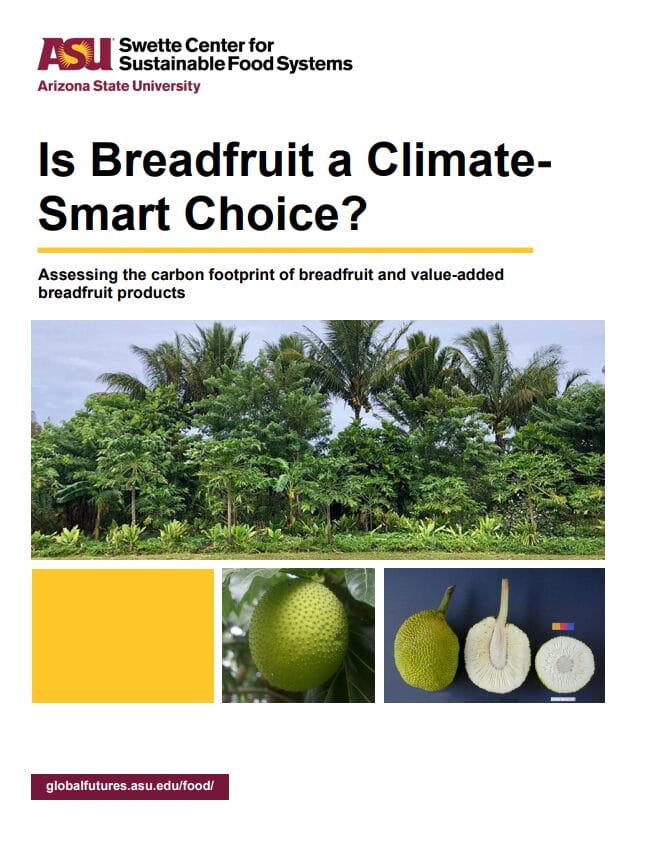
Is Breadfruit a Climate-Smart Choice?
Breadfruit cultivation aligns with sustainable agricultural practices, such as agroforestry, which enhance climate resilience and overall sustainability. However, given its high processing requirements, this study aimed to identify the carbon footprint of fresh breadfruit and value-added products made from breadfruit in Hawaiʻi. The study also looked at Hawaiʻi grown breadfruit compared to similar imported staple starches.
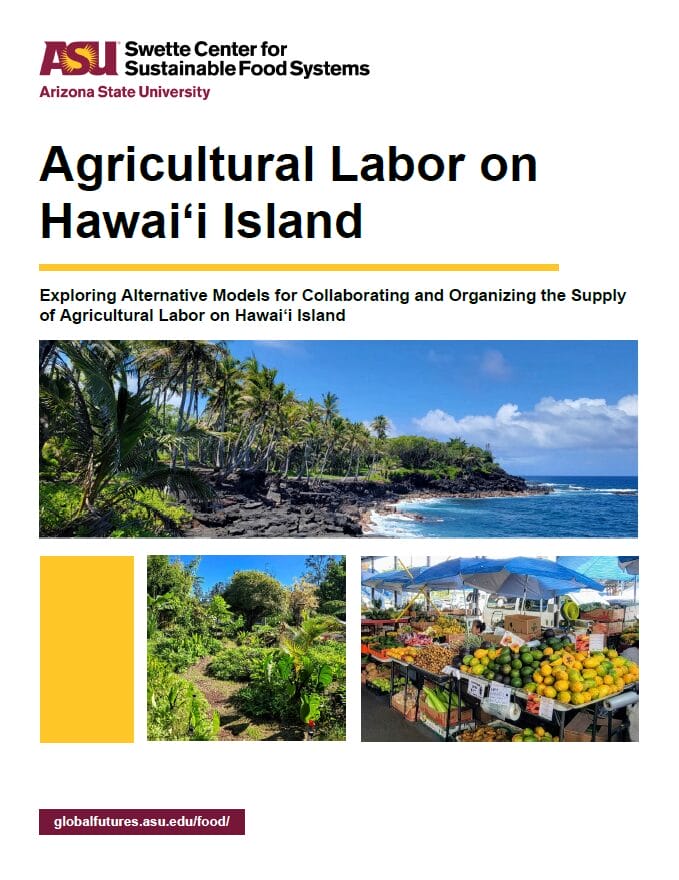
Agricultural Labor on Hawaiʻi Island
Hawaiʻi Island faces unique agricultural labor challenges due to the high cost of living, geographic isolation, and a limited labor pool. In response to these issues, the Hāmākua Institute, in collaboration with the Hawaiʻi Island Agriculture Partnership (HIAP), has sought to explore alternative models for organizing labor to support local farmers. This report aims to build on existing research by conducting a comparative analysis of local efforts across the Hawaiian Islands; collaborative models from Cuba and India; and various labor models from the United States to help identify potential labor solutions for Hawaiʻi Island’s agricultural sector.
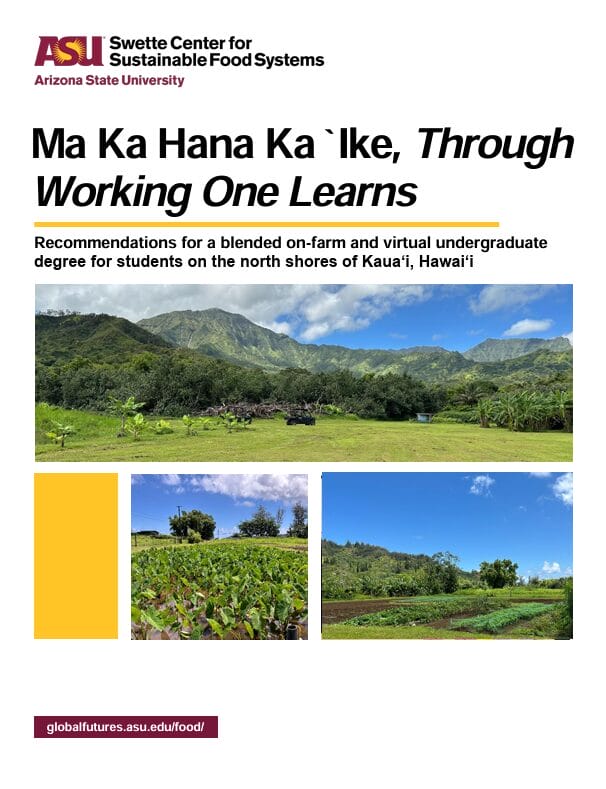
Ma Ka Hana Ka `Ike, Through Working One Learns
This report begins by providing a detailed background on the Waipā Foundation, an organization located on the North Shore of Kauaʻi that is dedicated to preserving Hawaiian cultural and environmental traditions. Following this, we present an overview of Arizona State University’s Bachelor of Science program in Sustainable Food Systems, highlighting its relevance as a model for integrating sustainability education with practical, hands-on experiences. Our research is guided by the following key question: What kind of hybrid higher education program—one that combines online coursework with experiential on-farm training—could best meet the needs of students on the North Shore of Kauaʻi?

Axis Deer Impacts in Maui County
The Maui County Department of Agriculture is working to control the overpopulation of axis deer in Maui County while also finding ways to utilize the deer as a sustainable food source to combat food insecurity. Given the high costs of living paired with the fact that over half of households in Maui County are below the ALICE (Asset-Limited, Income-Constrained, Employed) threshold, addressing food insecurity is critical. This study was conducted to identify probable axis deer population levels, assess laws and regulations, quantify monetary damage caused by the deer, and identify economically viable solutions. It focused on the impacts of axis deer on five main topic areas: environment, agriculture, food security, public health, and culture.
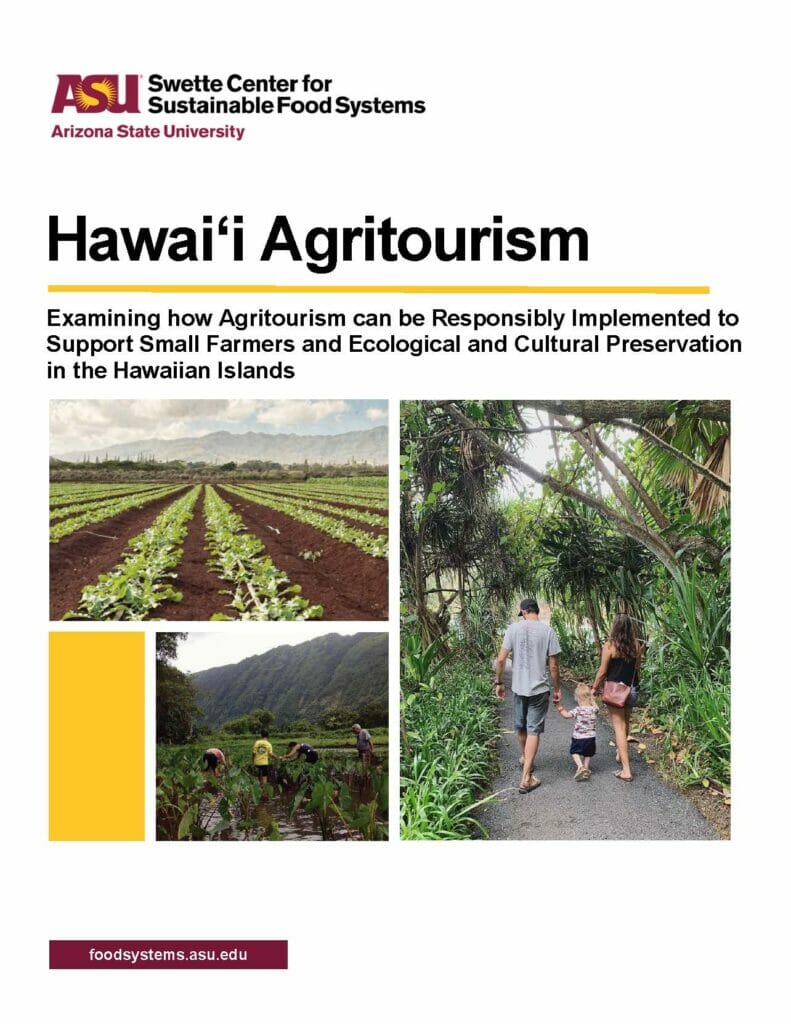
Hawaiʻi Agritourism
More than 10 million visitors traveled to Hawaiʻi in 2019, placing an enormous strain on a food system already burdened by a disproportionate reliance on imported food. Agritourism may be one solution for farmers to diversify their income, increase consumption of locally produced food, and connect farmers to local consumers. But in a place with such a robust tourism infrastructure, how can it be responsibly implemented and utilized in a way that benefits local farmers, residents, the environment, and rural and Native Hawaiian culture? This report endeavors to answer this question through a comprehensive examination of agritourism in the islands as it exists today, and by providing recommendations for agritourism in Hawaiʻi going forward.
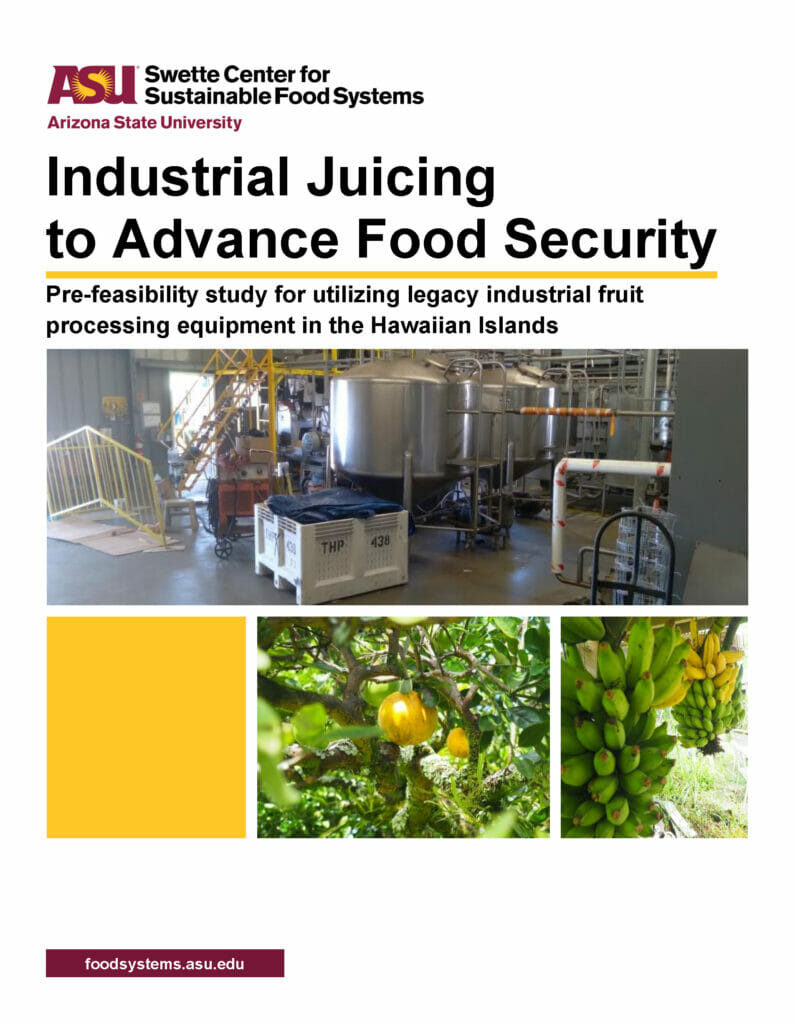
Industrial Juicing to Advance Food Security
The Hawaiian Islands are highly reliant on imported foods for feeding residents and visitors alike. This is in part due to a shortage in food processing infrastructure locally that would contribute to Hawaiʻi’s ability to process much of its own food products. This study examines the feasibility of increasing food self-sufficiency in the islands through utilizing legacy industrial fruit processing equipment recently acquired by Olohana Foundation, a small 501(c)3 non-profit in Hawaiʻi. This study asks: How can the Olohana Foundation develop their aseptic juicing line to best support increased food self-sufficiency in the islands? Additionally, how can the juicing line be re-deployed in a manner to provide sustainable economic opportunity to producers and other community members?
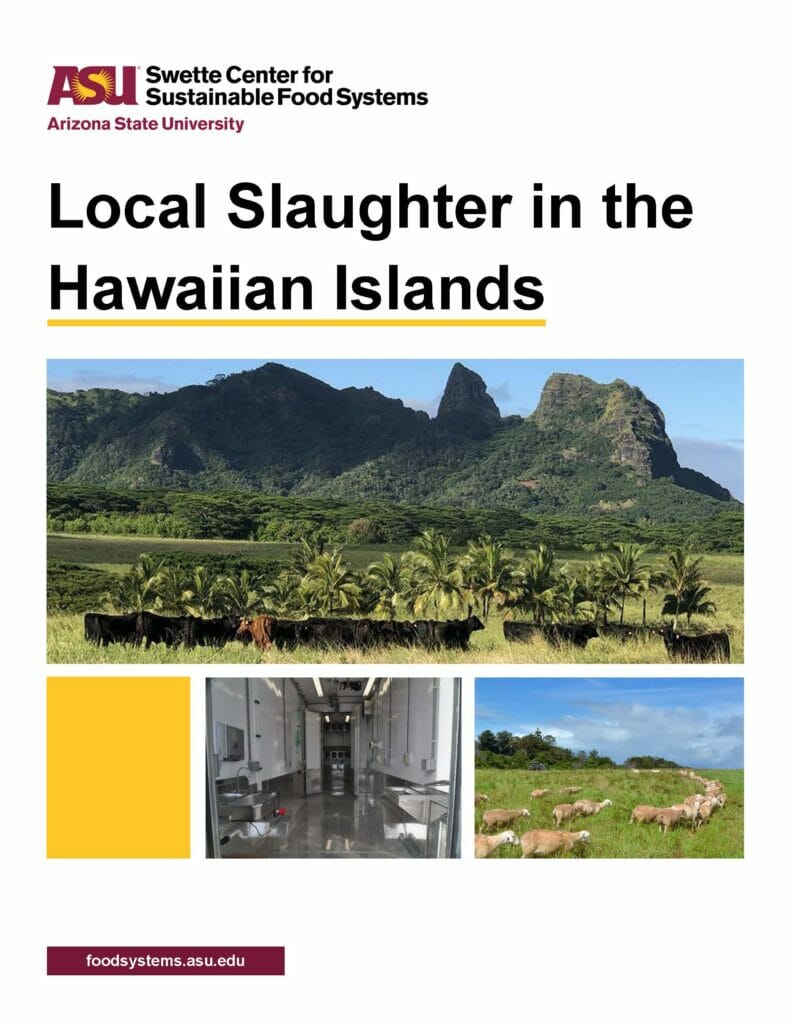
Local Slaughter in the Hawaiian Islands
Cattle and livestock make up a significant portion of agricultural production value in Hawaiʻi. However, 95 percent of Hawaiʻi-raised cattle are shipped to the Continental United States for grain-finishing and slaughter. The purpose of this report is to provide an overview of current ranching and slaughter capacities in Hawaiʻi, highlight relevant regulations and identify missing elements, offer case studies of similar operations and their procedures, and provide recommendations that Hōkūnui might consider in their pursuit to expand their slaughter capacity, while processing slaughter waste safely and sustainably.
Aquaculture research
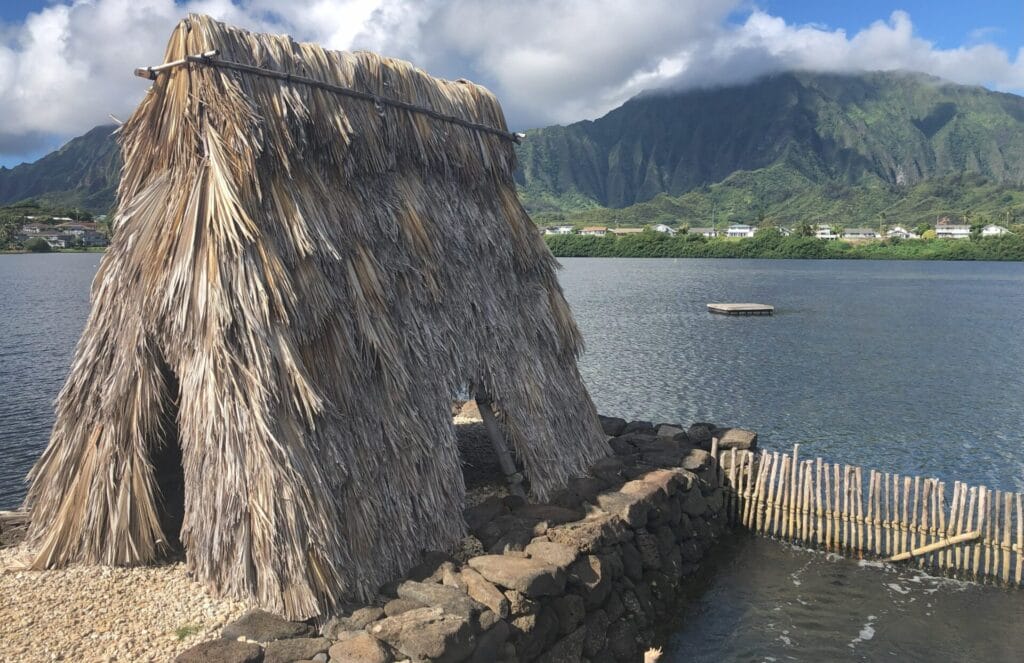
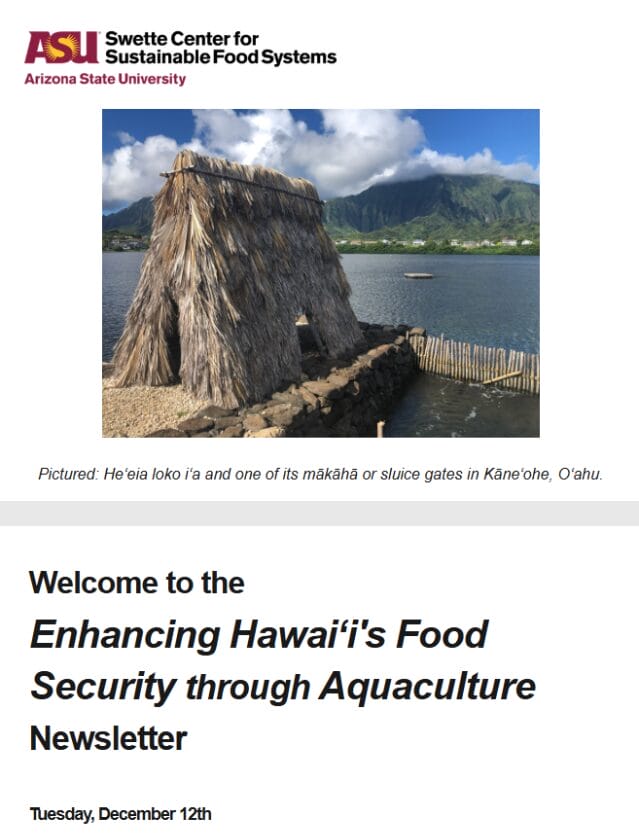
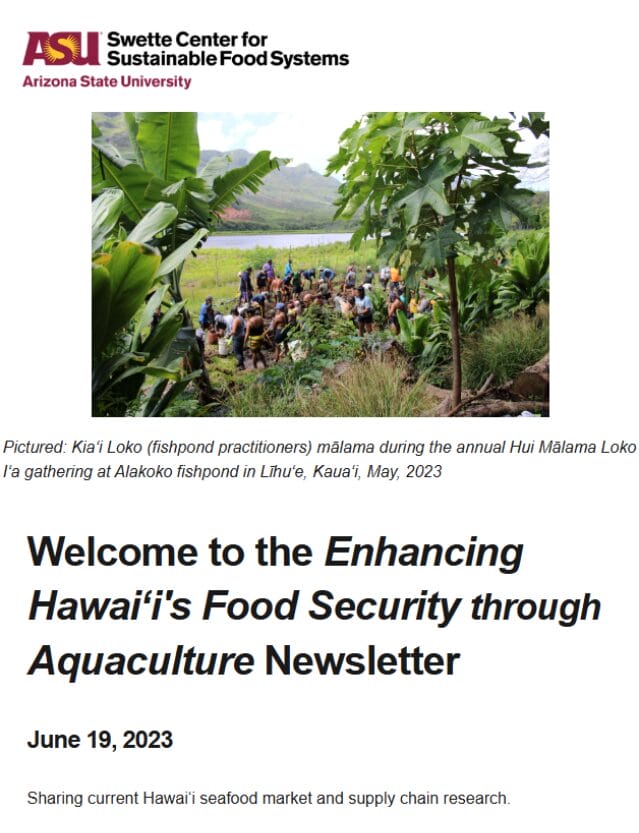
Hawaiʻi currently imports up to 63% of its commercial seafood. Local aquaculture production has the potential to improve this lack of seafood self-sufficiency. Furthermore, the growing revival and restoration of traditional Native Hawaiian fishponds (loko iʻa) are serving as important contributors to community food security, while providing valuable ecosystem services. Our USDA-AMS funded project “Enhancing Hawaiʻi’s Food Security through Aquaculture” supports Hawaiʻi aquaculture producers by providing in-depth research on market and supply chain landscapes, and supports increased opportunities for community stewardship of loko iʻa.
Project reports
Loko Iʻa for Agroecosystem Resilience
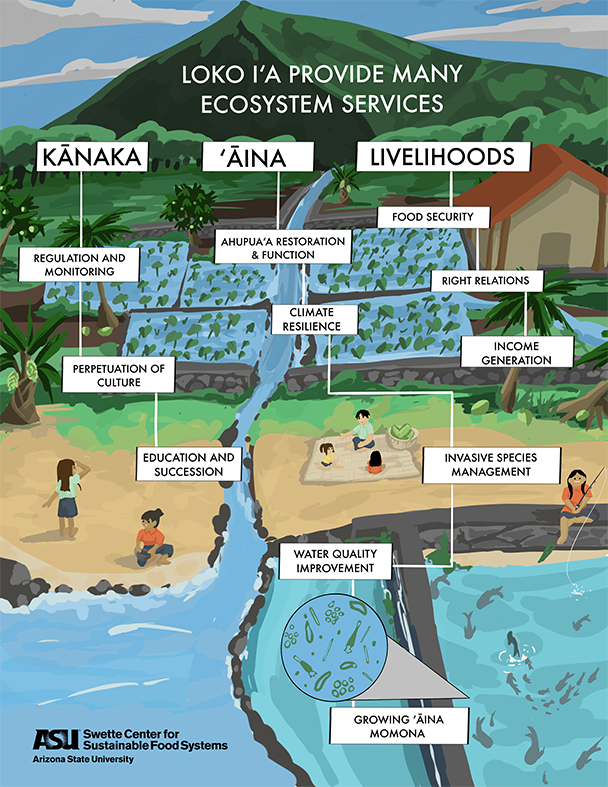
Our first report is the product of community-based research and collaboration with Kuaʻāina Ulu ʻAuamo (KUA) and the Hui Mālama Loko Iʻa (HMLI) network. It may serve as a resource for kiaʻi loko (fishpond protectors/stewards), policymakers, and communities alike to understand both established pathways towards loko iʻa stewardship, as well as current barriers. In addition, it proposes a novel framework for identifying and communicating the value that loko iʻa provide through the provision of ecosystem services. Finally, it explores a framework for potential certification standards and branding of loko iʻa products to support enhanced food sovereignty.
Hawaiʻi Aquaculture Supply Chain Analysis
Our second report aims to support sustainable aquaculture in Hawaiʻi by providing insight into supply chain challenges and suggesting solutions. It draws on stakeholder interviews, aquaculture producer and commercial seafood buyer survey data, as well as substantial industry landscape desk research. The authors provide an in-depth look at the value chain from inputs to marketing/distribution, as well as the enabling environment and permitting requirements. It concludes with actionable recommendations for all interested stakeholders.
Loko Iʻa ecosystem services poster
Want to stay updated on our Hawaiʻi-team’s research and news updates? Subscribe using the button below.
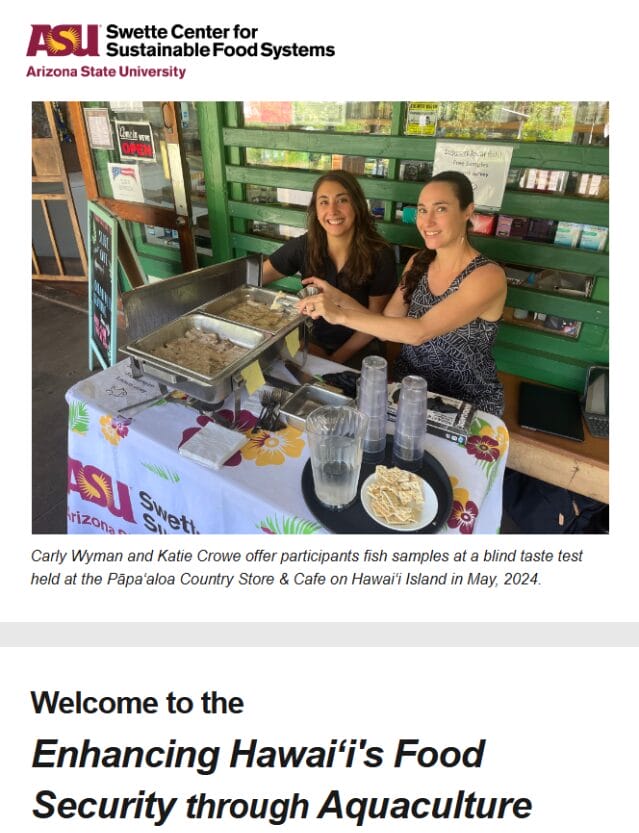
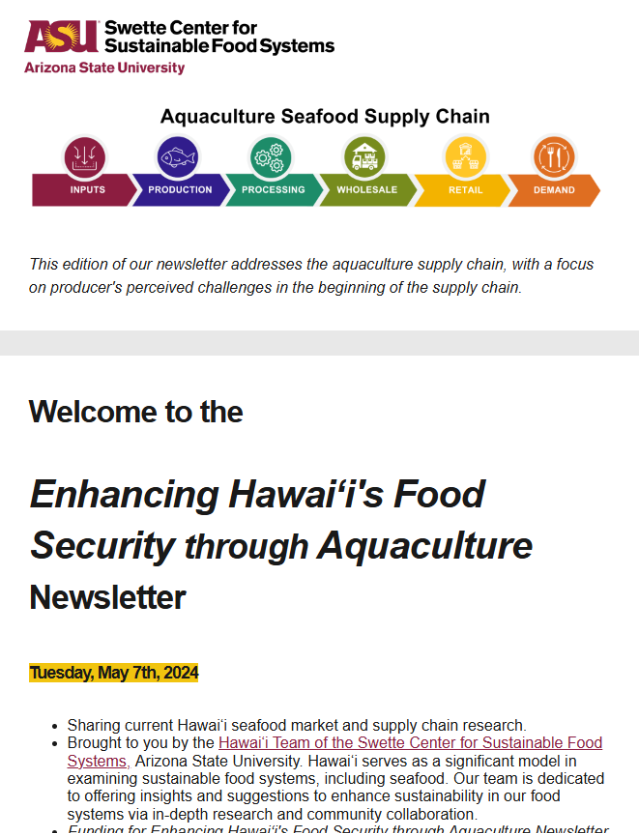
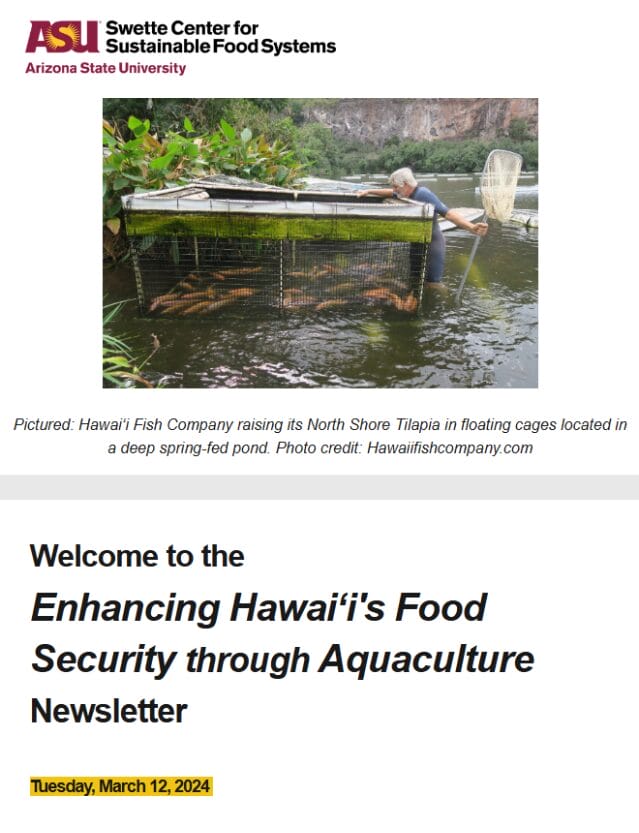
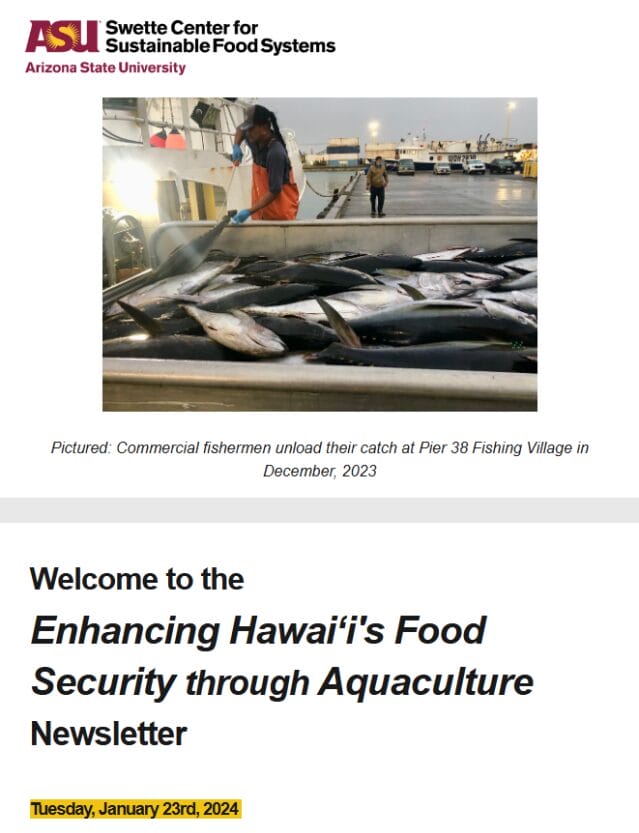
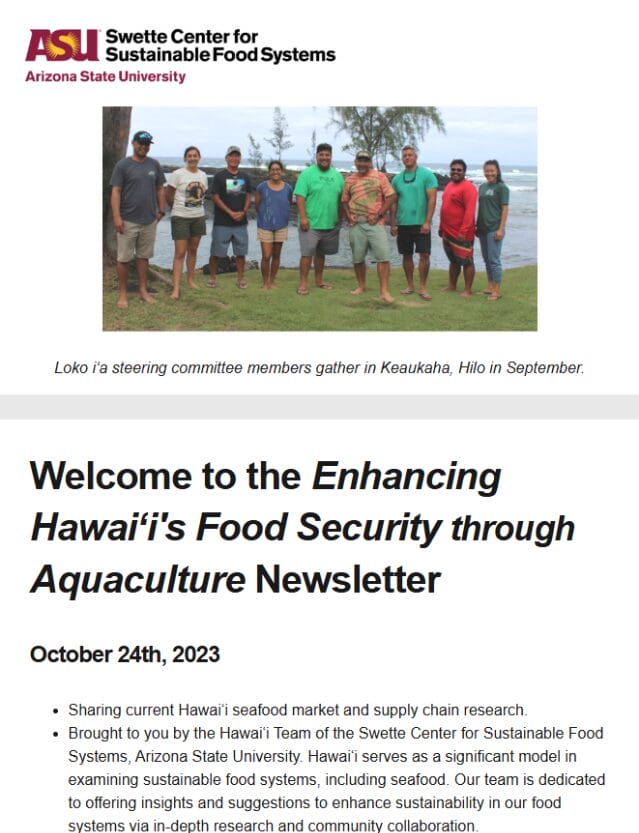
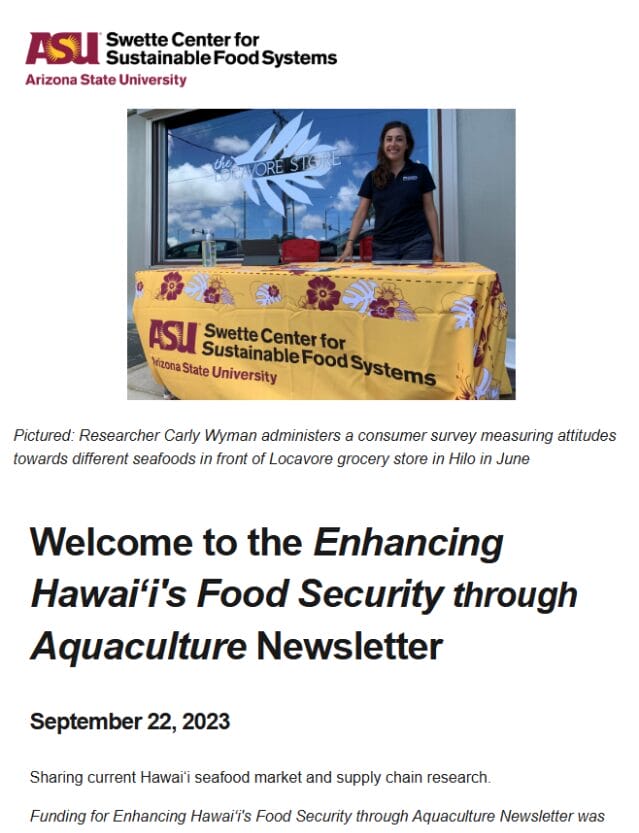
Past newsletters from the Enhancing Hawaiʻi’s Food Security through Aquaculture project:
Food systems planning partnership
We’re partnering with the Ke Ō Mau Center for Sustainable Island Food Systems within the University of Hawaiʻi System on their “Transforming Hawaiʻi’s Food System Together” initiative to advance food systems planning through integrated food policy.
