Drought
Arizona drought
Arizona is currently in a long-term drought that started in 1994. Since Arizona has an arid and semi-arid climate, highly variable precipitation is a normal part of the state. This makes long-term drought in Arizona more than a single dry season and instead becomes a series of dry years interrupted by a wet year or two. Since 1994, most watersheds in the state have experienced only a total of nine or ten wet years.
The deep canyon topography of the Western U.S. is ideal for creating large reservoirs, like Lake Mead and Lake Powell along the Colorado River or Roosevelt Lake along the Salt River in Arizona. These reservoirs help assist water supply during dry years. Read the history of the Salt-Verde Reservoir system on the SRP history website.
The current status of Arizona’s reservoirs is on our Precipitation page.
Short-term drought status

Short-term drought status is published each Thursday by the U.S. Drought Monitor.
Drought is assessed weekly by the U.S. Drought Monitor team, supported by members of the Arizona Drought Monitoring Technical Committee (MTC).
The Arizona MTC provides a short-term drought report each month: Monthly Short-Term Drought Report
Drought impacts are variable and differ across the country. Read more about Drought Classifications.
Long-term drought status
Long-term drought is assessed every three months by the AZ State Climate Office. The analysis includes 24-month, 36-month and 48-month Standardized Precipitation Evaporative Index data. The SPEI takes into account precipitation and evaporation due to temperature. Long-term drought can impact water resources related to streamflow, aquifer recharge and reservoir storage.
The Arizona MTC provides a long-term drought report each quarter: Quarterly Long-Term Drought Report
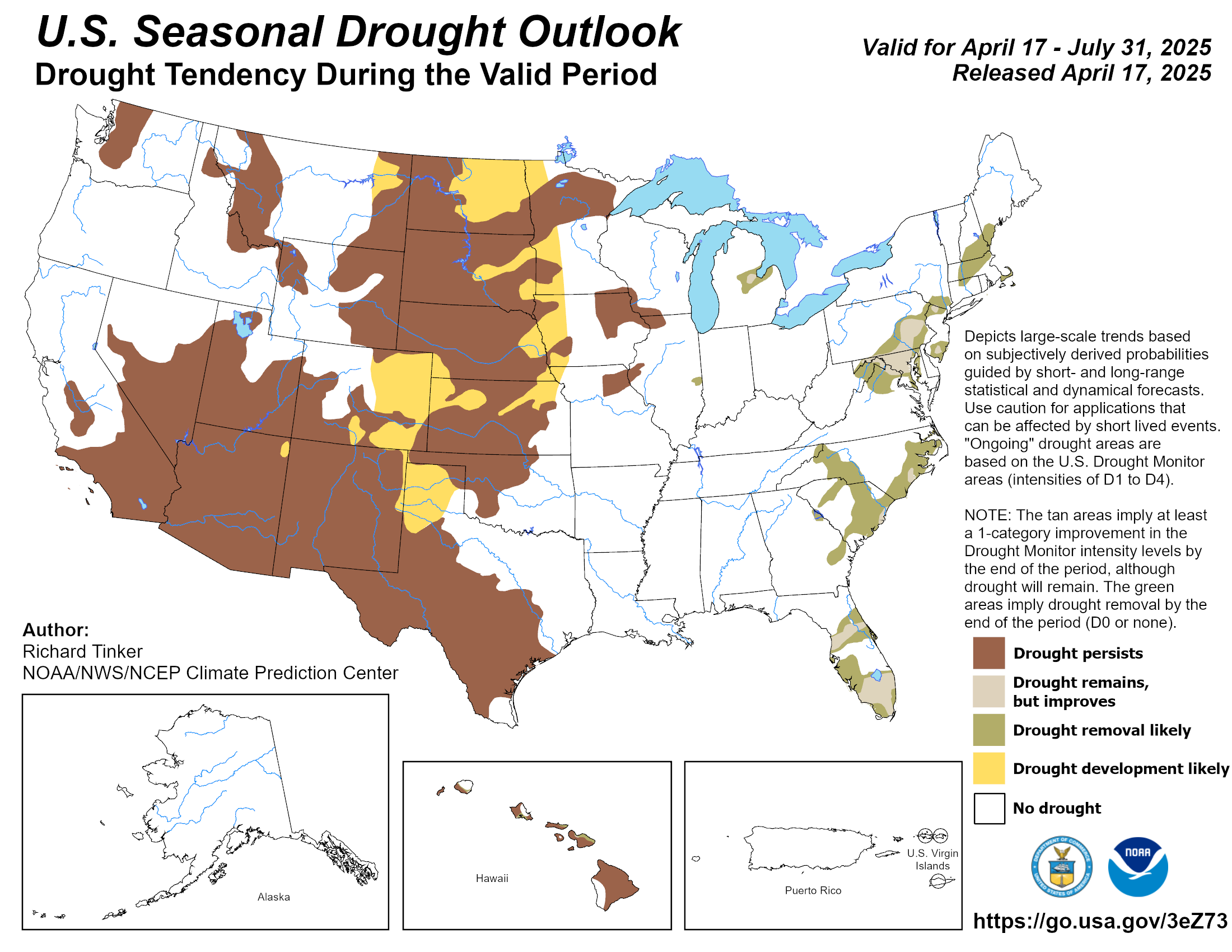
U.S seasonal drought outlook